Thursday, September 22, 2016

Recap of meeting 9/20 and forecast of upcoming meetings

Thanks, everyone, for a really nice discussion this week! Though our discussion deviated from the readings, I felt the ideas we discussed held important connections to the readings. We talked quite a bit about censorship and cultural differences related to what different cultures censor and we speculated why.

We'll meet again on Tuesday, October 4th. I have sent a request to the TTU police department inviting them to speak at our meeting: to talk about guns on campus and the new Campus Carry laws. 

We also decided to join the Humanities Center in reading George Orwell's 1984, a classic story of censorship and dystopian society. Information on this is found near the bottom of the link here: https://www.depts.ttu.edu/provost/humanities-center/book-groups.php, and I have pasted that information below. You will not need to buy a copy of this book. I have ordered a few copies, and the Humanities Center is offering free copies to the first 30 people to arrive.

We may also have an opportunity to learn about the Humanities Center and its workings. Dr. Don Lavigne (TTU) may visit our reading/discussion group, and I have asked him if it is possible for us to tour the Humanities Center.

I'm looking forward to seeing you all on October 4th!

Fall Book Read
The Humanities Center along with the TTU Library will sponsor a three-part discussion series around George Orwell's classic, dystopian, future-focused novel, 1984. The series is open to everyone; it is free; and refreshments will be served. The dates are October 10th, 17th, and 24th—all Mondays, all at 7:00 p.m. in Library Room 309. Take the east elevators. The first thirty people to arrive will receive a free copy of the book.

Tuesday, September 6, 2016

Upcoming meeting September 21st

This is going to be a wonderful year at TTU. We're going to have so much fun and learn so much during this exchange! Thanks to all who met today for the reading group and shared such interesting perspectives on the readings!

Please enjoy the upcoming readings without pressure, as we are really here to enjoy the company and to discuss select elements of the reading that we might apply through new lenses of our academic partnerships.

In America, people often take personality tests which analyze which sorts of behaviors they exhibit. Are these tests popular in China? One popular test is the JUNG personality test, which is available to take free online. You can find one here: http://psychcentral.com/quizzes/personality/start.php. (These are just for fun. As the author of this website says, "This is not a diagnostic personality instrument, and you should not take these results as anything other than as entertainment or for one's own personal growth and education.") I find this quite amusing, and the results are related to Managing Cultural Differences Chapter 2. Please don't feel you must share your results if you take this test. I have posted my results below. (Results are explained at the end of the test.) I believe my results are the result of my cultural upbringing.


You are I-S-T-J

Introverted - Sensing - Thinking - Judging (ISTJ)

ExtroversionIntroversion
44
IntuitiveSensing
43
ThinkingFeeling
64
PerceivingJudging
29


The chart on page 116 relates to Sungbum's discussion about global, glocal, and local thinking. Maybe in our next meeting, we can discuss what we believe it means to be global leaders and which character attributes contribute to the most successful examples of global leadership. In other words, what character traits do we most want to teach our students to have as they enter the global workforce?

I'll see you all on the 21st!
Brandy

Monday, September 5, 2016

Framework for first meeting 9/7/16

This week, let's begin by introducing ourselves and establishing a framework for the upcoming year in The Devil's Tongue Book Club / Reading Group. If you're joining us online, please comment and contribute to the discussion in any way you feel fits!

Let's continue by discussing Managing Cultural Differences through Chapter 1, titled "Global leaders, culture, and a changing world."


  • The authors call for "sophisticated global leadership skills" as they provide a need for managing cultural differences on the inside cover. Let's read it together.
  • In Chapter 1 (p. 2), we find some shocking examples taken from an article in The Economist. Do you read The Economist? http://www.theeconomist.com 
  • On page 6, the authors say, "We believe managing cultural differences skillfully for all individuals, organizations, NGOs, and governments from all countries is a human and business imperative." Why do you think this is true?
  • Pages 7-11 provide several shocking stories of cultural experiences. Which did you find most shocking, and why?
  • My favorite example from this chapter is found on p. 13. Are you more like Guillaume or Rebecca?
  • On p. 11, the authors define culture. How might we define culture?
  • On p. 12, the authors offer 10 categories for understanding macro or micro culture. Are there any more you'd add to the list? Would you omit some? Let's consider these 10 aspects as we continue through the reading group:
    • Sense of smell and space
    • Communication and language
    • Dress and appearance
    • Food and feeding habits
    • Time and time consciousness
    • Relationships
    • Values and norms
    • Beliefs and attitudes
    • Mental process and learning
    • Work habits and practices
  • And the 10 concepts of cultural variables:
    • Environment
    • Time
    • Action
    • Communication
    • Space
    • Power
    • Individualism
    • Competitiveness
    • Structure
    • Thinking
  • P. 19 introduces Geert Hofstede. Perhaps Dr. Rice can give us a 5-10 minute intro. to Hofstede's work.
  • The image on p. 23 provides a continuum of cultural values (according to Confucian interpretation rather than a Western perspective). Perhaps our visiting scholars can provide insight into Confucian interpretations throughout the reading group meetings now and in the future.
  • P. 29 provides the image summarizing qualities of interculturally competent leadership. I propose we maintain this as a guide as we continue our discussions.
  • Question of the week for Dr. Rice: What does this have to do with what we do in TCR?
Next meeting, 9/20, let's discuss chapters 2 and 4. 

Image from MCD Chapter 1

This image from Moran, Abramson, and Moran's Managing Cultural Differences, 9th ed. (p. 29) might provide us a framework for thinking our way through this semester:


Thursday, September 1, 2016

Welcome to The Devil's Tongue 2016-2017!


Welcome to The Devil's Tongue reading group!

When I started The Devil's Tongue reading group last fall, this is what I had to say on why the reading group exists:
"Inspired by Dr. Rich Rice's writings and teachings, I am interested in learning how various Englishes and how various levels of those Englishes and their derivatives (e.g. technical communication) are taught throughout the world. Presented with the opportunity to engage in critical analysis of Xiaoye You's Writing in the Devil's Tongue: A History of English Composition in China with Chinese scholars at Texas Tech University, I invite my friends and colleagues to join in synchronous and asynchronous discussion of this book. Please post online and/or join us in person, or merely share your experiences of teaching abroad in English, the devil's tongue.

Purpose: You writes (xii), "This book has been written for both composition teachers in the United States and English teachers in the rest of the world. The purpose is to bring the parties together to generate productive conversations." Let's come together to generate productive conversations!" 

Working with several international scholars from around the world, in the U.S. and abroad, I enjoy meeting new people and sharing in diverse intellectual conversations about why and how we educate--especially non-native English speakers. Previously, in The Devil's Tongue reading group, we read and discussed the following books:
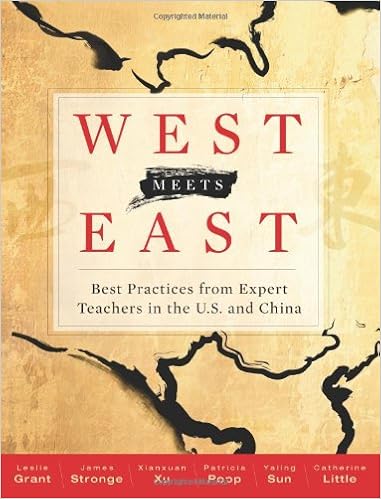

West Meets East: Best Practices from Expert Teachers in the U.S. and China. Grant et al. share their research in comparing pedagogical practices in U.S. and Chinese elementary in schools. We learned a lot about our students' and teachers' experiences that shaped the students we see in higher ed. This helped us learn how to adapt our teaching to accommodate such diverse students in the present era.
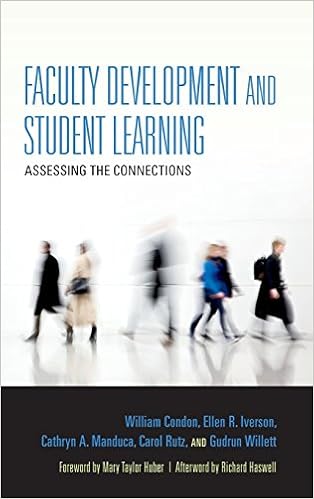


Faculty Development and Student Learning. Condon et al. share their multi-year research among two writing programs in U.S. universities discussing: "recent research in the Scholarship of Teaching and Learning (SoTL) to assessment of faculty development and its effectiveness, the authors show that faculty participation in professional development activities positively affects classroom pedagogy, student learning, and the overall culture of teaching and learning in a college or university."


This year, I have worked with Dr. Rice to continue our readings every other week on the topics of

  • Managing Cultural Differences
  • Careers Around the World
  • how digital humanities have developed in the U.S. and abroad, and
  • how digital humanities have become the binding thread of managing cultural diversity and leading our students to careers through effective and purpose-driven higher education.
We'll be reading selections from Moran and Abramson's Managing Cultural Differences; Crompton and Lane's Doing Digital Humanities; and Briscoe, Hall, and Mayrhofer's Careers Around the World.

Product DetailsProduct DetailsProduct Details


In addition to these readings, we often share our personal and professional experiences. The group aims to bring scholars together for intellectual discussion and fun. This year, I hope we might also include some "field trips" to various TTU events, museums, sites, and resources.

Our reading group is comprised of me, a PhD student in Technical Communication and Rhetoric; Dr. Rich Rice, our faculty advisor; graduate students of TTU; TTU English Department's current visiting scholars from China and South Korea; previous visiting scholars; and scholars from U.S. universities. Some scholars are participating synchronously face-to-face, while others are contributing asynchronously online. We welcome questions and comments from anyone anywhere in the world. Please join us. Feel free to email me directly: brandy.bippes (at) ttu.edu.

I'm looking forward to working with you in The Devil's Tongue this year!
Brandy