Sunday, October 16, 2016

Week of 10/16 schedule

Hello everyone! We had a really great time at The Humanities Center's reading group of 1984 last Monday. A quick reminder that we'll be at that reading group again this Monday. Please feel free to go even if you haven't done the readings. This is a bit of a cultural experience inside the academy that I think has a lot to offer. Library room 309 Monday 7-9 pm.

Additionally, please remember we're meeting this Tuesday for a special presentation from Dr. Don Lavigne from The Humanities Center. He's really excited to speak to us about The Humanities Center!

Monday, October 10, 2016

10/10 Reading of 1984 commencement

WHO: us!
WHAT: Reading George Orwell's 1984
WHEN: October 10, 17, & 24. 7-9pm
WHERE: TTU Library, Room 309 (take the East elevators to the 3rd floor)

I have emailed a copy of the 1984 reading schedule. I just spoke with Jack Becker from the TTU Library. He's very excited to host us for the reading of George Orwell's 1984. The reading begins tonight at 7 pm. We're all meeting in the TTU Library, room 309 from 7-9. Free copies of the book are available to the first 30 visitors, so please arrive early if you don't have a book. 

I can offer rides home after the event. I realize the buses may not run so late.

My daughter will also join us. Please feel free to invite friends and family! (The book may not be appropriate for readers under age 13.)

Thursday, September 22, 2016

Recap of meeting 9/20 and forecast of upcoming meetings

Thanks, everyone, for a really nice discussion this week! Though our discussion deviated from the readings, I felt the ideas we discussed held important connections to the readings. We talked quite a bit about censorship and cultural differences related to what different cultures censor and we speculated why.

We'll meet again on Tuesday, October 4th. I have sent a request to the TTU police department inviting them to speak at our meeting: to talk about guns on campus and the new Campus Carry laws. 

We also decided to join the Humanities Center in reading George Orwell's 1984, a classic story of censorship and dystopian society. Information on this is found near the bottom of the link here: https://www.depts.ttu.edu/provost/humanities-center/book-groups.php, and I have pasted that information below. You will not need to buy a copy of this book. I have ordered a few copies, and the Humanities Center is offering free copies to the first 30 people to arrive.

We may also have an opportunity to learn about the Humanities Center and its workings. Dr. Don Lavigne (TTU) may visit our reading/discussion group, and I have asked him if it is possible for us to tour the Humanities Center.

I'm looking forward to seeing you all on October 4th!

Fall Book Read
The Humanities Center along with the TTU Library will sponsor a three-part discussion series around George Orwell's classic, dystopian, future-focused novel, 1984. The series is open to everyone; it is free; and refreshments will be served. The dates are October 10th, 17th, and 24th—all Mondays, all at 7:00 p.m. in Library Room 309. Take the east elevators. The first thirty people to arrive will receive a free copy of the book.

Tuesday, September 6, 2016

Upcoming meeting September 21st

This is going to be a wonderful year at TTU. We're going to have so much fun and learn so much during this exchange! Thanks to all who met today for the reading group and shared such interesting perspectives on the readings!

Please enjoy the upcoming readings without pressure, as we are really here to enjoy the company and to discuss select elements of the reading that we might apply through new lenses of our academic partnerships.

In America, people often take personality tests which analyze which sorts of behaviors they exhibit. Are these tests popular in China? One popular test is the JUNG personality test, which is available to take free online. You can find one here: http://psychcentral.com/quizzes/personality/start.php. (These are just for fun. As the author of this website says, "This is not a diagnostic personality instrument, and you should not take these results as anything other than as entertainment or for one's own personal growth and education.") I find this quite amusing, and the results are related to Managing Cultural Differences Chapter 2. Please don't feel you must share your results if you take this test. I have posted my results below. (Results are explained at the end of the test.) I believe my results are the result of my cultural upbringing.


You are I-S-T-J

Introverted - Sensing - Thinking - Judging (ISTJ)

ExtroversionIntroversion
44
IntuitiveSensing
43
ThinkingFeeling
64
PerceivingJudging
29


The chart on page 116 relates to Sungbum's discussion about global, glocal, and local thinking. Maybe in our next meeting, we can discuss what we believe it means to be global leaders and which character attributes contribute to the most successful examples of global leadership. In other words, what character traits do we most want to teach our students to have as they enter the global workforce?

I'll see you all on the 21st!
Brandy

Monday, September 5, 2016

Framework for first meeting 9/7/16

This week, let's begin by introducing ourselves and establishing a framework for the upcoming year in The Devil's Tongue Book Club / Reading Group. If you're joining us online, please comment and contribute to the discussion in any way you feel fits!

Let's continue by discussing Managing Cultural Differences through Chapter 1, titled "Global leaders, culture, and a changing world."


  • The authors call for "sophisticated global leadership skills" as they provide a need for managing cultural differences on the inside cover. Let's read it together.
  • In Chapter 1 (p. 2), we find some shocking examples taken from an article in The Economist. Do you read The Economist? http://www.theeconomist.com 
  • On page 6, the authors say, "We believe managing cultural differences skillfully for all individuals, organizations, NGOs, and governments from all countries is a human and business imperative." Why do you think this is true?
  • Pages 7-11 provide several shocking stories of cultural experiences. Which did you find most shocking, and why?
  • My favorite example from this chapter is found on p. 13. Are you more like Guillaume or Rebecca?
  • On p. 11, the authors define culture. How might we define culture?
  • On p. 12, the authors offer 10 categories for understanding macro or micro culture. Are there any more you'd add to the list? Would you omit some? Let's consider these 10 aspects as we continue through the reading group:
    • Sense of smell and space
    • Communication and language
    • Dress and appearance
    • Food and feeding habits
    • Time and time consciousness
    • Relationships
    • Values and norms
    • Beliefs and attitudes
    • Mental process and learning
    • Work habits and practices
  • And the 10 concepts of cultural variables:
    • Environment
    • Time
    • Action
    • Communication
    • Space
    • Power
    • Individualism
    • Competitiveness
    • Structure
    • Thinking
  • P. 19 introduces Geert Hofstede. Perhaps Dr. Rice can give us a 5-10 minute intro. to Hofstede's work.
  • The image on p. 23 provides a continuum of cultural values (according to Confucian interpretation rather than a Western perspective). Perhaps our visiting scholars can provide insight into Confucian interpretations throughout the reading group meetings now and in the future.
  • P. 29 provides the image summarizing qualities of interculturally competent leadership. I propose we maintain this as a guide as we continue our discussions.
  • Question of the week for Dr. Rice: What does this have to do with what we do in TCR?
Next meeting, 9/20, let's discuss chapters 2 and 4. 

Image from MCD Chapter 1

This image from Moran, Abramson, and Moran's Managing Cultural Differences, 9th ed. (p. 29) might provide us a framework for thinking our way through this semester:


Thursday, September 1, 2016

Welcome to The Devil's Tongue 2016-2017!


Welcome to The Devil's Tongue reading group!

When I started The Devil's Tongue reading group last fall, this is what I had to say on why the reading group exists:
"Inspired by Dr. Rich Rice's writings and teachings, I am interested in learning how various Englishes and how various levels of those Englishes and their derivatives (e.g. technical communication) are taught throughout the world. Presented with the opportunity to engage in critical analysis of Xiaoye You's Writing in the Devil's Tongue: A History of English Composition in China with Chinese scholars at Texas Tech University, I invite my friends and colleagues to join in synchronous and asynchronous discussion of this book. Please post online and/or join us in person, or merely share your experiences of teaching abroad in English, the devil's tongue.

Purpose: You writes (xii), "This book has been written for both composition teachers in the United States and English teachers in the rest of the world. The purpose is to bring the parties together to generate productive conversations." Let's come together to generate productive conversations!" 

Working with several international scholars from around the world, in the U.S. and abroad, I enjoy meeting new people and sharing in diverse intellectual conversations about why and how we educate--especially non-native English speakers. Previously, in The Devil's Tongue reading group, we read and discussed the following books:


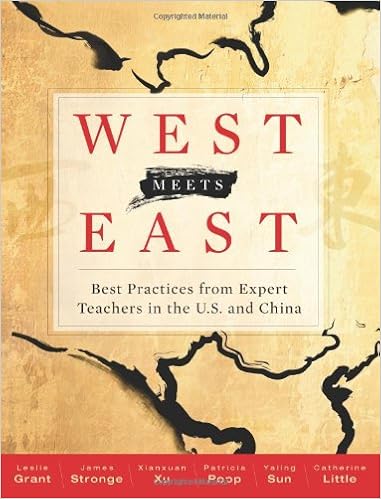
West Meets East: Best Practices from Expert Teachers in the U.S. and China. Grant et al. share their research in comparing pedagogical practices in U.S. and Chinese elementary in schools. We learned a lot about our students' and teachers' experiences that shaped the students we see in higher ed. This helped us learn how to adapt our teaching to accommodate such diverse students in the present era.


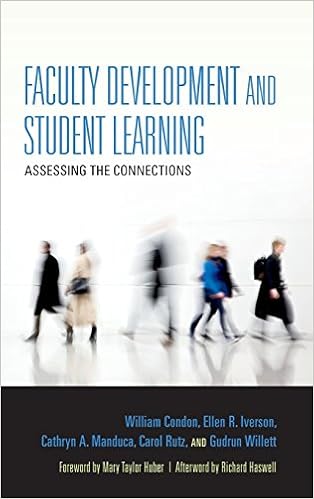
Faculty Development and Student Learning. Condon et al. share their multi-year research among two writing programs in U.S. universities discussing: "recent research in the Scholarship of Teaching and Learning (SoTL) to assessment of faculty development and its effectiveness, the authors show that faculty participation in professional development activities positively affects classroom pedagogy, student learning, and the overall culture of teaching and learning in a college or university."


This year, I have worked with Dr. Rice to continue our readings every other week on the topics of

  • Managing Cultural Differences
  • Careers Around the World
  • how digital humanities have developed in the U.S. and abroad, and
  • how digital humanities have become the binding thread of managing cultural diversity and leading our students to careers through effective and purpose-driven higher education.
We'll be reading selections from Moran and Abramson's Managing Cultural Differences; Crompton and Lane's Doing Digital Humanities; and Briscoe, Hall, and Mayrhofer's Careers Around the World.

Product DetailsProduct DetailsProduct Details


In addition to these readings, we often share our personal and professional experiences. The group aims to bring scholars together for intellectual discussion and fun. This year, I hope we might also include some "field trips" to various TTU events, museums, sites, and resources.

Our reading group is comprised of me, a PhD student in Technical Communication and Rhetoric; Dr. Rich Rice, our faculty advisor; graduate students of TTU; TTU English Department's current visiting scholars from China and South Korea; previous visiting scholars; and scholars from U.S. universities. Some scholars are participating synchronously face-to-face, while others are contributing asynchronously online. We welcome questions and comments from anyone anywhere in the world. Please join us. Feel free to email me directly: brandy.bippes (at) ttu.edu.

I'm looking forward to working with you in The Devil's Tongue this year!
Brandy

Thursday, August 4, 2016

Fall 2016 Devil's Tongue reading club schedule and reading materials to be announced soon!

Wednesday, April 27, 2016

April 28th Meeting

Greetings! The semester is coming to an end quickly! We'll be meeting this week (April 28th) to cover chapters 5-6, then we'll meet again on May 12th.

Thursday, April 21, 2016

April 21 meeting

Hello, everyone! This week, we'll be doing a special exercise. I asked everyone to bring a quote from this week's reading so we could "play a game." We'll all put our quotes into a hat, then draw one quote for discussion. If your quote is chosen, you will be asked to be the honorary discussion leader for that topic. I hope you will find this exercise both collaborative and engaging!

Brandy

Wednesday, April 13, 2016

Condon Ch 1-2

This week, we'll cover William Condon et al's Faculty Development and Student Learning, chapters 1-2.

Chapter 1 is titled: Connecting Faculty Learning to Student Learning.

The chapter opens with the analogy of faculty development and student learning as parts of the "puzzle of understanding and improving the relationship between teaching and learning" (p. 1). Here are a few of my thoughts on this chapter:

"As teaching improves, does student learning also improve?" as posited by the authors on p. 2. I have always believed so, as an intrinsic action. We take this for granted. Do we need research to show this is true? The down falls, the authors say, are found on page 2: "Without such key information faculty development programs remain vulnerable, tentative, even ephemeral at many, if not most, colleges and universities." Further, "taking a holistic view... promotes a systematic approach to improving teaching and learning but also... renders a better picture of the faculty learning process."

"...people who become college faculty learn far mroe about teaching as in-service teachers than they do as pre-service graduate students" (p. 2). This reminds me of the saying, "Practice makes perfect" or, "To really learn something, you must do it."

Another analogy of the double spiral on p. 3 shows the iterative nature of teaching. Both are self contained yet open to new influences.

Can Rich elaborate on p. 4 -- "Everyone knows faculty are rewarded for research...."?

P. 5: "When faculty learn more about teaching, logic dictates that they become better teachers; and when faculty become better teachers, their students learn more or experience better learning." Today, perhaps everyone can share a favorite quote from the book.

One important note is that faculty seek out development opportunities. What are the motivations of Chinese scholars to do so?

Benefits of this research are found on p. 12.

The book is a giant case for faculty development.


Chapter 2 is titled: Sites of Faculty Learning


Let's create a visual to compare Carleton College and WSU. On p. 22, "...it's offerings invite the whole community." This feels like a very collectivist approach.
Which is most like your university? Do you have a preference for either model?

Monday, April 4, 2016

Updated schedule through Spring '16

As we discussed last week, I am now posting the new meeting schedule. Please watch the blog for updates I will post to help us through this denser reading.

Apr 14: Condon through Ch 2
Apr 21: Condon, Ch 3-4
Apr 28: Condon, Ch 5-6
May 12: Condon, Ch 7

Brandy

Tuesday, March 29, 2016

Upcoming Meeting March 31st: The spring rain moistens things silently

Dear friends,

We will be meeting this week, March 31st, to finish West Meets East: Classroom Organization, Management, and Discipline; and Lessons Learned. Though we're not teaching at the K-12 level, I found this book to be quite interesting. Knowing a bit about where our students are coming from helps me understand how we might better adapt our teaching to fit their needs.

Some of the challenges of the classrooms are:
  • class size
  • classroom arrangement
  • limited class time
  • extra space
I was inspired by the fact that many of the teachers described these challenges as opportunities to create highly focused lessons (p. 120).

Q: What from this week's reading inspired you?

In Chapter 5, Grant et. al share "lessons from the West" and "lessons from the East." 

Q: Were you shocked by any of the lessons?

I found it most interesting that the Chinese teachers were ok with some students not understanding them. In that situation, students relied upon their peers to help them decode the information (p. 129).

Q: On pages 132-133, Grant et. al presented the idea of the student watch cards. Have you ever incorporated this into a university classroom? Would you do so? Why? Why not?

My favorite part of chapter 5 is Figure 5.4: Classroom Management Versus Relationship Building. This is such an important distinction I have discovered in teaching (and in parenting). On page 145, Grant et. al note"
Building a caring, respectful relationship full of trust allows students to feel comfortable taking risks and pushing beyond their comfort zones to achieve more than they might have thought possible.

Lessons Learned 

I found the comparisons of Cultural Dimensions on page 152 most interesting. I'm saddened by the U.S.'s low measure in long-term orientation (LTO). This is something I feel often in the U.S.

I was intrigued by collaborative lesson planning Chinese teachers use. I would like to see us do this more frequently in the U.S.

Q: What was the biggest lesson you learned by reading this book?
Q: Which lesson seems the most important takeaway from this book?
Q: What surprised you most in reading this book?

Closing with a Metaphor and Reflection

Let's each close with a metaphor as Grant et. al did in Chapter 6. Choose a metaphor that describes how you think about teaching.
Q: How would you complete the following sentence? Teaching is __________.

As we move on to read Bill Condon's Faculty Development and Student Learning I think it's a good time to reflect upon the ways West Meets East has changed us and/or how our experiences studying, teaching, or working abroad have changed us.

Q: How have you changed as a result of studying, teaching, or working abroad? What lesson will you always carry with you from this experience?

Next Meeting

Our next meeting will be held in two weeks. We'll meet on April 14th to discuss the introduction and first chapter of Bill Condon's Faculty Development and Student Learning, then again on April 21st. Condon's reading is denser than Grant et. al.


Monday, March 14, 2016

Changed meeting date from March 17th

Oops! We have a meeting scheduled for March 17th to finish West Meets East. I'm afraid we'll all be on spring break. Let's finish the book on March 24th instead. Then, we'll start digging into Condon's book the following week on March 31st.

Wednesday, February 17, 2016

Feb 18 Meeting & Discussion

Our first order of business this week is a slight modification of the schedule. We will be meeting Thursday mornings at 10:00 a.m. in the TTU Bookstore/Starbuck's

New Meeting Schedule:
Feb 4: Meet and organize
Feb 18: West meets East through Chapter 2
Mar 3: West Meets East, Ch 3-4
Mar 24: West Meets East, Ch 5-7
Mar 31: Condon through Ch 2
Apr 14: Condon, Ch 3-4
Apr 28: Condon, Ch 5-6
May 12: Condon, Ch 7

*Dates in italics have been modified

I was intrigued with this week's readings of Chapters 1-2. "Developing new cohorts of highly qualified and competitive workers requires a high-quality education system in every local community," (p. 1) struck me as a powerful introduction. This captures the global nature of education quite well, I feel.

Further thoughts and quotes for consideration:

Ch 1
  • "... we aren't competing against a stationary goal," (p. 3). I'm trying to recall the theorist who questioned whether progress was indeed what led to bettering society. This seems like a value judgment based on capitalist beliefs. Marx??
  • The US is 26th in math -- p. 2. Does this surprise readers? I wonder if this shows the US education system as wanting, compared to other countries. Do you think this affects students' desire to study abroad? In math-based programs, or in all programs? What do you think student perceptions are of the US as an international educational choice (prohibitive costs aside)?
  • A delicate question: The Chinese model focuses upon "memorization, drilling, and prescribed textbooks -- to practices that foster individuality," (p. 4). Issues of plagiarism are frequently discussed as concerns of teachers instructing Chinese students. These two viewpoints seem to conflict.
  • Another delicate question: "...people from Western cultures tend to attribute success and failure to ability (or lack thereof)" (p. 8). I sincerely disagree from a personal perspective. I have never thought this way. What do our American instructors feel about this statement?
  • Upon reading the passage on p. 8 to a friend (Gardner's statement), a friend likened US views of students ("Genetics, heredity, and measured intelligence play no role,") to "Evangelical" thinking, and the Asian belief that failure results from students' lack of hard work as "Catholic."
  • It's interesting that as we are studying learner-centered pedagogies in the US, the trend has shifted. "The educational reform initiatives in the so-called Asian tiger countries... have become more "American" and have become increasingly learner-centered and focused on higher-order thinking (p. 9).
  • Grant et. al provide an outline of three key guidelines used by the NCLB law to determine whether a teacher is highly qualified. Those guidelines seem to set the bar for educators extremely low, and number 3 doesn't appear to be an objectively measurable goal. Frankly, I'm underwhelmed with those standards. What are others' impressions of these guidelines?
  • "...the research team chose to accept the risk of equating national teacher awards with teacher excellence," (p. 14).
  • "...awards and achievements revealed that [grantors'] criteria included some of all of the following qualities:
    • Contributions to education..." (p. 16). Is this even a standard? Really, this is the most fundamental aspect of teaching responsibilities. In China, "... exceptional roles played by teachers as they inspire the development of their students as whole people." This seems noble and altruistic.
Ch 2
  • "To that end, he made home visits early in the year, sitting around the kitchen table with parents -- 'on their turf' -- to discuss shared goals for student progress," (p. 23). Is one visit enough? This makes me uncomfortable thinking a teacher might come into my home and pass judgment on my lifestyle.
  • The comments from the Chinese teachers feel more holistic and focused on developing students as members of their society. The comments from the American teachers feel detached from deeper levels of emotion -- obligatory. "Teachers in China had more personal and family-like relationships with their students, and they often spoke of maintaining harmonious relationships," (p. 25). My mentor Dr. LaVona Reeves continuously modeled this aspect of compassionate teaching. "Teachers in the United States are more likely to focus on caring within the context of a professional teacher-student relationship," (p. 27). I feel this is very true, and unfortunate.
  • The teacher's comments at the end of p. 27 and into p. 28 feel to me they're not relationship building (as they were framed) but rather merely having access to the parents in order to report negatively upon the child's actions. This bothers me. Even though all teachers believed they were educating the whole child, serving as role models, etc. (p. 30-31), there is a difference in the ethos I detect in the teachers' feedback. The US teachers seem to "other" and distance students, referring to the students as "them" and answering the questions in very egocentric terms or by stating nothing of interest in their self-reflective assessments. The Chinese teachers seem to be more community oriented and vested in the students more organically. I believe this is one significant difference between collectivist and individualistic cultures shining through.
  • Question: Do our visiting scholars have philosophy statements? Are they norms in China for instructors?
  • The videotape and self-reflection method on p. 43 is reported as, "a similar approach to collaborative lesson study." I don't see this at all. If there is no feedback from the community, these instructors are missing a valuable contribution of peer review.
  • Figure 2.3 shows the Lesson Study Cycle. While a couple of these aspects are modeled in the pedagogy courses I have attended, I'm disappointed we miss out on collaboratively planning lessons. This seems key to what we're modeling in the classroom, yet our lesson plan development is valued as an individual exercise.
What are your thoughts?

Wednesday, February 3, 2016

Spring 2016 Welcome & Schedule

DEVIL’S TONGUE READING GROUP SCHEDULE, SPRING 2016

Welcome to the Devil's Tongue Reading Group where American and Chinese scholars meet to research English program curriculum development in the U.S. and China!

I'm Brandy (白兰地), a PhD student in technical communication & rhetoric at TTU. I hold a master's degree in rhetoric and technical communication and Teaching English as a Second Language (TESL/TESOL) from Eastern Washington University. My undergraduate majors were in technical communication and anthropology (linguistic focus). My undergraduate minors were in linguistics, TESOL, and visual communication design. I owned my own business from 1996-2015 in computer networking and consulting (technical communication and more). My teaching experience includes teaching English composition, ESL, and technical communication. I love education! My passion is in sharing education, leadership, and international experiences. I am excited to share our international experiences in education through the Devil's Tongue reading group!

Dr. Rich Rice is my wonderful mentor, an excellent instructor, prolific writer, and international instructor of technical communication.

Bradley Bleck is a terrific friend of mine and Dr. Rice's. Bradley is an English instructor at Spokane Falls Community College in my home city in Washington State. Bradley has taught English in China. He will join us in asynchronous discussion (email and on the blog site).

This spring, we will be reading two books:
  • Faculty Development and Student Learning: Assessing the Connections (Scholarship of Teaching and Learning), by William Condon 2016
  • West Meets East: Best Practices from Expert Teachers in the U.S. and China, by Leslie Grant
Both books may be purchased on Amazon.com. Amazon.com is a very good source for books in the U.S.


Introductions:
Please introduce yourself here online.
Name
University
Area of Expertise
Anything else you'd like everyone to know!

Meeting time: Every other Thursday 10:00-10:50 a.m.
Meeting place: TTU Starbuck's bookstore (in the TTU Student Union Building) and online (http://devilstonguebookclub.blogspot.com/)

Meeting Schedule:
Feb 4: Meet and organize
Feb 18: West meets East through Chapter 2
Mar 3: West Meets East, Ch 3-4
Mar 17: West Meets East, Ch 5-7
Mar 31: Condon through Ch 2
Apr 14: Condon, Ch 3-4
Apr 28: Condon, Ch 5-6
May 13: Condon, Ch 7