New Meeting Schedule:
Feb 4: Meet and organize
Feb 18: West meets East through Chapter 2
Mar 3: West Meets East, Ch 3-4
Mar 24: West Meets East, Ch 5-7
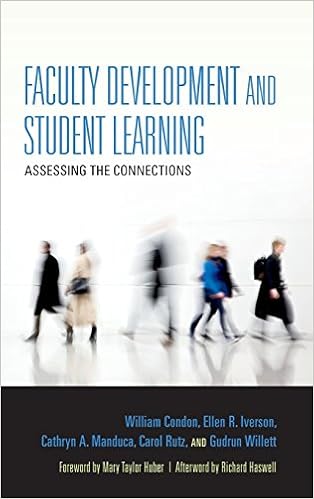
Mar 31: Condon through Ch 2
Apr 14: Condon, Ch 3-4
Apr 28: Condon, Ch 5-6
May 12: Condon, Ch 7
*Dates in italics have been modified
I was intrigued with this week's readings of Chapters 1-2. "Developing new cohorts of highly qualified and competitive workers requires a high-quality education system in every local community," (p. 1) struck me as a powerful introduction. This captures the global nature of education quite well, I feel.
Further thoughts and quotes for consideration:
Ch 1
- "... we aren't competing against a stationary goal," (p. 3). I'm trying to recall the theorist who questioned whether progress was indeed what led to bettering society. This seems like a value judgment based on capitalist beliefs. Marx??
- The US is 26th in math -- p. 2. Does this surprise readers? I wonder if this shows the US education system as wanting, compared to other countries. Do you think this affects students' desire to study abroad? In math-based programs, or in all programs? What do you think student perceptions are of the US as an international educational choice (prohibitive costs aside)?
- A delicate question: The Chinese model focuses upon "memorization, drilling, and prescribed textbooks -- to practices that foster individuality," (p. 4). Issues of plagiarism are frequently discussed as concerns of teachers instructing Chinese students. These two viewpoints seem to conflict.
- Another delicate question: "...people from Western cultures tend to attribute success and failure to ability (or lack thereof)" (p. 8). I sincerely disagree from a personal perspective. I have never thought this way. What do our American instructors feel about this statement?
- Upon reading the passage on p. 8 to a friend (Gardner's statement), a friend likened US views of students ("Genetics, heredity, and measured intelligence play no role,") to "Evangelical" thinking, and the Asian belief that failure results from students' lack of hard work as "Catholic."
- It's interesting that as we are studying learner-centered pedagogies in the US, the trend has shifted. "The educational reform initiatives in the so-called Asian tiger countries... have become more "American" and have become increasingly learner-centered and focused on higher-order thinking (p. 9).
- Grant et. al provide an outline of three key guidelines used by the NCLB law to determine whether a teacher is highly qualified. Those guidelines seem to set the bar for educators extremely low, and number 3 doesn't appear to be an objectively measurable goal. Frankly, I'm underwhelmed with those standards. What are others' impressions of these guidelines?
- "...the research team chose to accept the risk of equating national teacher awards with teacher excellence," (p. 14).
- "...awards and achievements revealed that [grantors'] criteria included some of all of the following qualities:
- Contributions to education..." (p. 16). Is this even a standard? Really, this is the most fundamental aspect of teaching responsibilities. In China, "... exceptional roles played by teachers as they inspire the development of their students as whole people." This seems noble and altruistic.
- "To that end, he made home visits early in the year, sitting around the kitchen table with parents -- 'on their turf' -- to discuss shared goals for student progress," (p. 23). Is one visit enough? This makes me uncomfortable thinking a teacher might come into my home and pass judgment on my lifestyle.
- The comments from the Chinese teachers feel more holistic and focused on developing students as members of their society. The comments from the American teachers feel detached from deeper levels of emotion -- obligatory. "Teachers in China had more personal and family-like relationships with their students, and they often spoke of maintaining harmonious relationships," (p. 25). My mentor Dr. LaVona Reeves continuously modeled this aspect of compassionate teaching. "Teachers in the United States are more likely to focus on caring within the context of a professional teacher-student relationship," (p. 27). I feel this is very true, and unfortunate.
- The teacher's comments at the end of p. 27 and into p. 28 feel to me they're not relationship building (as they were framed) but rather merely having access to the parents in order to report negatively upon the child's actions. This bothers me. Even though all teachers believed they were educating the whole child, serving as role models, etc. (p. 30-31), there is a difference in the ethos I detect in the teachers' feedback. The US teachers seem to "other" and distance students, referring to the students as "them" and answering the questions in very egocentric terms or by stating nothing of interest in their self-reflective assessments. The Chinese teachers seem to be more community oriented and vested in the students more organically. I believe this is one significant difference between collectivist and individualistic cultures shining through.
- Question: Do our visiting scholars have philosophy statements? Are they norms in China for instructors?
- The videotape and self-reflection method on p. 43 is reported as, "a similar approach to collaborative lesson study." I don't see this at all. If there is no feedback from the community, these instructors are missing a valuable contribution of peer review.
- Figure 2.3 shows the Lesson Study Cycle. While a couple of these aspects are modeled in the pedagogy courses I have attended, I'm disappointed we miss out on collaboratively planning lessons. This seems key to what we're modeling in the classroom, yet our lesson plan development is valued as an individual exercise.
What are your thoughts?